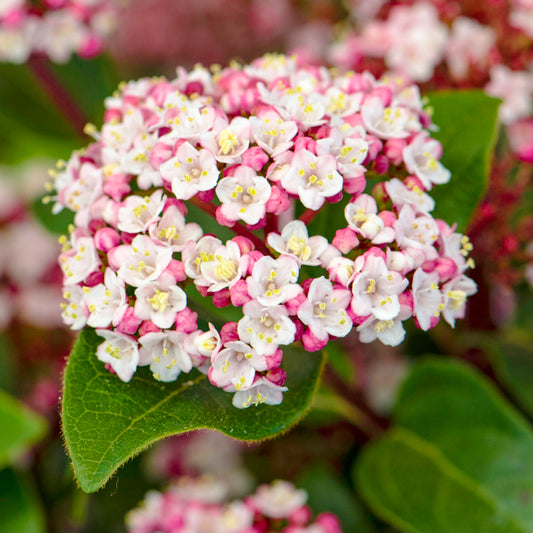
Gardening lingo can feel quite intimidating when you start out. Understand the basic types of plants and how you can combine them in your garden for maximum impact.
Most gardens contain a mix of shrubs, perennial plants and annuals, perhaps with a few trees for height. In this guide, we explain the different types of plants and what they’re useful for, so you can choose the right mix when designing your garden.
If you’re wondering why bulbs aren’t listed below, it’s because they’re a plant’s storage system, rather than a type of plant. Most bulbs are perennials, though many tulip cultivars are grown as annuals. Find out more about bulbs in our guide to the difference between bulbs, corms, tubers and rhizomes.
What is an annual plant?

Annuals complete their life cycle in one year. You usually sow them in spring or autumn (for the following year) and then they’ll either die or you’ll pull them up at the end of the year. Bedding plants are often annuals, as they’re planted for temporary colour or interest.
Annual plants are a good choice for:
-
Filling gaps in borders where you need a seasonal splash of colour.
-
Pots and hanging baskets.
-
Testing colour schemes cheaply.
-
Temporary beds, where you don’t want to invest in longer-lasting plants.
Annual plants are divided into two categories: hardy and half-hardy (sometimes called tender) plants. It’s good to have a mix of the two in your garden for colour throughout the year, as hardy annuals typically flower in spring and early summer, whereas half-hardy plants often don’t get going until July or later.
Hardy annuals
Hardy annuals can withstand the cold, meaning you can sow them outside early in spring (March or April) or in early autumn the previous year. Many self-seed and as they can survive the British winter, you may find new flowers popping up a year or more after you planted them.
Popular hardy annuals include cornflowers, love-in-a-mist (e.g., Nigella 'Delft Blue'), sunflowers, sweet peas, nasturtiums and certain types of poppy (e.g., Poppy 'Ladybird').
Half-hardy annuals
These tender plants hate frost, so you either need to start them off indoors and harden them off before planting outdoors or wait until mid-spring (or whenever the risk of frost has passed) to sow directly into the ground. This may sound like a lot of effort, but half-hardy annuals will reward you with stunning flowers through to late summer or early autumn.
Cosmos (e.g., Cosmos ‘Purity’), French marigolds (e.g., Marigold French 'Boy O Boy'), zinnias, tithonias (e.g., Tithonia ‘Torch’) and morning glory are all examples of half-hardy annuals.
What is a biennial plant?

Biennial plants have a two-year life cycle, but they only flower once, in the second year. You sow them in May or June and then plant out the young plants in autumn to establish strong roots before the winter. Biennials typically flower from late spring to early summer. After flowering, they will die off.
Foxgloves are a common biennial that often self-seeds and grows in the same place year after year. Sweet Williams (e.g., Sweet William 'Auricula-Eyed'), hollyhocks, wallflowers (e.g., Wallflower ‘Cloth of Gold’) and honesty are other examples of biennial plants. If you don’t want to sow biennials from seed, you can buy potted plants to plant out in early autumn.
What is a perennial plant?

Perennials have a life cycle of three years or more. They’re often called herbaceous perennials, as they don’t have woody stems like shrubs and trees. Most perennials are deciduous, meaning the plant dies back to the rootstock in autumn before shooting up again in spring. Evergreen perennials like heucheras, bergenias and many grasses and ferns keep their leaves year-round, and are useful to add interest to borders when other perennials die back.
Perennials are the mainstay of most garden borders as once established, they grow year after year. They’re also a good choice for:
-
Cut flowers (e.g., peonies, phlox, delphiniums, penstemons).
-
Establishing a garden on a budget. Perennials are easy to propagate and divide, so with a bit of patience, you can grow your garden for free.
-
Large gardens, as you can choose low-maintenance varieties that spread to fill large borders.
-
Containers and pots that you don’t want to replant every year.
-
Wildlife gardens.
There’s a huge variety of perennials, and you can find plants to suit any soil conditions, aspect or style of garden. Like annuals, perennial plants may be hardy or half-hardy.
Hardy perennial plants
Hardy perennials can survive the UK winter and be left in the ground all year round. In addition to flowering plants like geums, alstroemeria, echinacea and hardy geraniums, many ornamental grasses and ferns are classed as hardy perennials.
Half-hardy perennial plants
Tender perennials need to be brought indoors during the winter. Growing them in pots and containers makes this job easier. Popular half-hardy perennials include fuchsias, dahlias, begonias and most cordylines.
If you don’t have anywhere to store tender perennials over the winter, you can also grow them as annuals. Pelargoniums are a popular tender perennial that is often treated as an annual.
Short-lived perennials
Short-lived perennials bloom in successive years, but after the second year, they may start struggling. Some, like lupins, agastaches, rudbeckias, aquilegias and knautia, readily self-seed, so even though the parent plant may die off, you’ll get a steady supply of new plants – though not, perhaps, in exactly the spot you’d like them to grow! You can also lift and divide many short-lived perennials in early autumn or early spring to keep them thriving.
What is a shrub?

Shrubs have multiple woody stems and branches. The term covers a wide range of plants, from rambling roses to bushy lavenders and giant rhododendrons. Shrubs may be deciduous, evergreen or semi-evergreen (where they keep their leaves in mild winters).
Shrubs are useful for:
-
Adding year-round structure to your garden, as well as colour in winter (for evergreen and winter-flowering varieties).
-
Incorporating varied heights in a border or garden to create balance.
-
Creating standout topiary features.
-
Taking up space in large or woodland gardens – choose larger varieties of rhododendron, hydrangeas or buddleias.
Shrubs come in all shapes and sizes. Low, bushy shrubs such as lavender and heather look great at the front of borders, whereas larger hydrangeas and azaleas or climbing roses provide a backdrop to lower-growing annuals and perennials. Dogwood (e.g., Cornus 'Midwinter Fire'), mahonias, Viburnum 'Lisarose', winter-flowering camellias and witch hazel are all good shrubs to add colour to your garden during the drab winter months.
What is a tree?

Trees have a single woody stem (trunk) with a network of branches. They come in a wide range of sizes, from tiny Japanese maples and patio fruit trees to towering oaks and beech trees, and can be deciduous (where they lose their leaves in autumn) or evergreen.
Incorporate trees into your garden to:
-
Add a focal point to a small garden.
-
Encourage birds and other wildlife.
-
Add height, structure and shade.
-
Grow your own fruit – espalier or patio trees can work well in smaller gardens.
There are plenty of suitable trees for a small garden, though you do need to make sure you choose a variety that won’t grow too large. Magnolia 'Susan' is a gorgeous, compact flowering tree, or choose a classic acer like Acer ‘Taylor’ for dramatic foliage.
FAQ
What is the definition of an annual plant?
An annual plant is one that completes its life cycle in a year, from germination through to flowering and death. Hardy annuals can be sown outside in late autumn (to flower the following year) or early spring. Half-hardy or tender annuals are usually sown indoors in spring, then planted out after the risk of frost has passed.
What is a perennial plant?
A perennial plant is one that has a lifespan of three or more years. They can be deciduous or evergreen and flowering or non-flowering (e.g., ferns and grasses). Herbaceous perennials die back to their root system over winter, then regrow in the spring.
What’s the difference between a tree and a shrub?
A tree typically has a single trunk topped with a network of branches, whereas shrubs have multiple woody stems and branches that shoot out from near the ground, forming a bushier shape. Trees tend to be taller, but both trees and shrubs come in all sizes to suit different gardens.